Mattress education
A Practical Guide to Choosing an Organic Mattress
An organic mattress is not a single material, feel, or promise. It is a collection of components—fibers, foams, fabrics, finishes—each with its own specifications and standards. The most useful way to shop is to look beyond the label, understand what the documentation actually covers, and compare the mattress against your own needs for comfort, support, fit, and care.
That approach is less glamorous than a sweeping promise of “clean” sleep, but much more revealing. Whether you are exploring latex, wool, or a different construction, a considered checklist can help you assess options—including Naturepedic models—without assuming that one brand, certification, or firmness level is right for everyone.
What does “organic mattress” mean?
The phrase can refer to some, or many, of the materials in a mattress. A cotton cover may be certified organic while the comfort layers use other materials; another mattress may combine organic cotton, wool, and latex. The wording alone does not tell you which components are certified, how much of the mattress they represent, or whether the finished product itself carries a particular certification.
Start by asking a precise question: Which material is organic, and what documentation supports that claim? Look for the material named, the relevant certification, and the scope of the certification. A certificate for cotton does not automatically certify latex, wool, adhesives, flame barriers, or every other component in the mattress. Nor should a certification for an ingredient be treated as proof of every broader claim made about a finished product.
Language such as “natural,” “eco-friendly,” and “non-toxic” can be useful as a starting point, but it is not a substitute for specific, verifiable details. These terms may be used differently across manufacturers and product categories. Read the product specifications alongside the label, and contact the manufacturer if an important detail is missing.
It also helps to separate two questions that are often blended together: how a material was produced, and how the finished mattress performs. Organic credentials relate to defined standards and supply-chain requirements. Firmness, pressure relief, temperature feel, and durability are separate considerations that depend on construction and personal experience.
Read certifications as documents, not decorations
Certification logos can make a label look reassuring, but the useful information lies in the standard behind the mark. Different programs evaluate different materials or attributes. Some focus on the organic status of a fiber; others may address chemical inputs, emissions, or the processing of a material. A certification should not be treated as a universal seal of quality or as a guarantee that every shopper will find a mattress comfortable.
When reviewing a certification, check whether it applies to the finished mattress, a specific component, or a supplier’s material. Confirm that the claim is current and that the named product or material is within its scope. If the manufacturer provides a certificate, technical sheet, or a clear explanation of what is covered, compare it with the language used in the product description.
- Identify the certified component. Is the claim about the cotton cover, wool batting, latex, or the complete product?
- Find the issuing standard. Note the organization and what its program is designed to assess.
- Check product-level details. A brand may make several mattresses with different layers and materials.
- Look for clear qualification. Responsible descriptions explain what a certification does and does not establish.
- Ask about gaps. If a layer, finish, or construction detail is not described, request clarification before relying on an assumption.
For example, a mattress description may identify certified organic wool and cotton but provide separate information about its latex. Read each claim on its own terms. The goal is not to collect the greatest number of logos; it is to understand the composition and evidence well enough to make a confident comparison.
Understand the materials beneath the cover
A mattress is a layered object, and those layers shape its feel. Two products marketed as organic can behave very differently if one uses a latex core and another is a low-profile wool mattress. Consider the role of each material rather than treating “organic” as a description of comfort.
Latex
Latex is used in mattress cores and comfort layers. Its feel varies with the layer’s thickness, density, and position in the design, as well as the surrounding materials. A latex mattress may feel buoyant or responsive, but the word “latex” alone does not establish firmness or suitability for a particular sleeper. Ask whether the latex is Dunlop or another type, how many layers are used, and how the manufacturer describes their individual roles. Anyone with a known latex sensitivity should seek appropriate professional guidance and review product information carefully rather than assuming that a cover eliminates exposure.
Wool
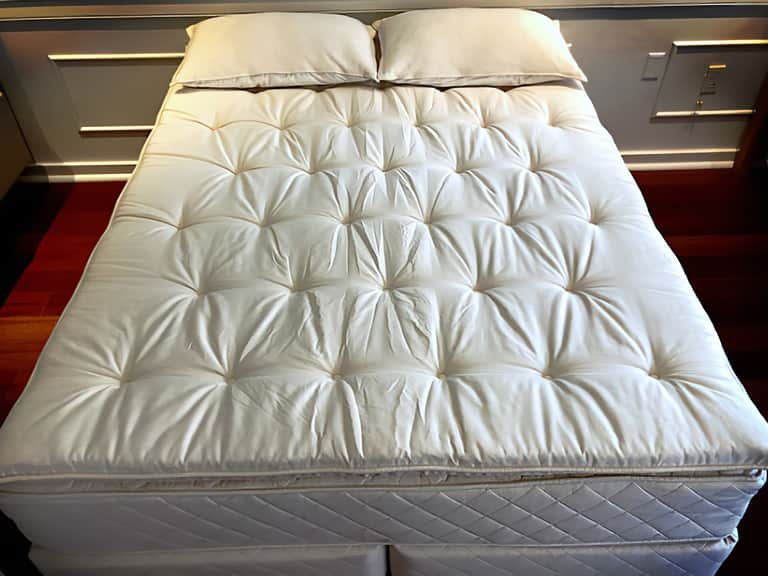
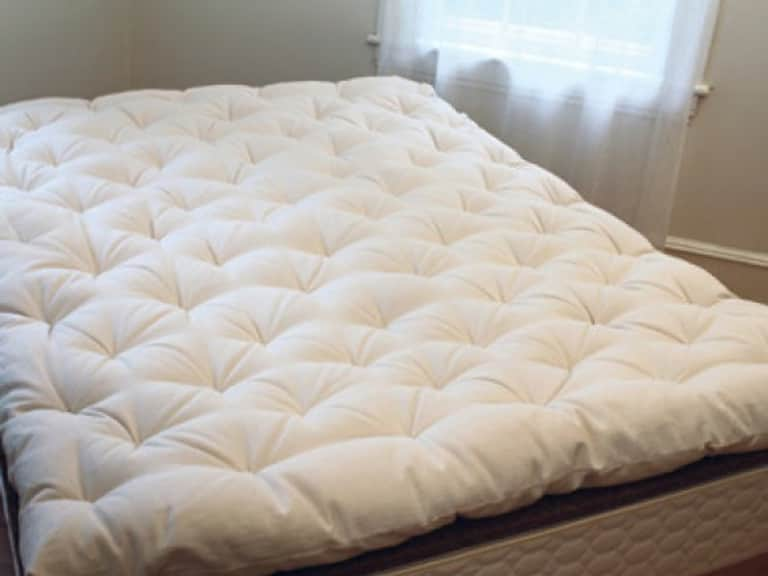
Wool may be used as batting or as part of a comfort layer. It can contribute a cushioned surface and is often described as breathable and moisture-managing. Its presence does not, by itself, reveal how firm a mattress will feel or whether it will meet a particular sleeper’s temperature preferences. Wool mattresses can also differ substantially in height and construction, from a slim, tufted design to a more elaborate layered build.
Cotton
Cotton commonly appears in covers, quilting, and batting. Its weave and construction affect the surface feel, while the amount and arrangement of fill influence loft and cushioning. Check whether cotton is used throughout or only in the outer fabric, and whether the product specifies organic sourcing for the relevant component.
Other components
Mattresses may include barriers, stitching, adhesives, fire-safety components, and foundation requirements in addition to the headline materials. Ask for a full material breakdown when one is not readily available. A careful description of the entire construction is more useful than a prominent claim about just one layer.
Choose comfort by testing your own needs
Firmness labels are not universal measurements. One company’s “medium” may feel different from another’s, and the same mattress may feel different depending on a sleeper’s body shape, weight distribution, sleeping position, and preference. Use firmness language as an initial filter, not a verdict.
Think about the positions in which you spend the most time. Side sleepers often pay close attention to pressure at the shoulders and hips; back sleepers may prioritize an even, supported feel; stomach sleepers commonly want to avoid excessive sinkage around the middle. These are broad tendencies, not rules. A useful mattress should feel comfortable to you while allowing you to rest in a position that feels sustainable.
If you share a bed, consider both sleepers rather than choosing around only one person’s preference. Motion transfer, edge support, differing firmness needs, and the practical possibility of separate comfort preferences may matter. Ask whether a mattress is designed for one uniform feel or allows separate configurations; do not assume that a split option is available unless it is specified.
When possible, test a mattress in a way that resembles how you actually sleep. Lie down for several minutes in your usual positions, relax rather than holding yourself rigidly, and notice whether you feel comfortable across the areas that tend to carry pressure. For online shopping, study the trial terms carefully: length of the trial, required break-in period, return fees, pickup arrangements, and any exclusions can all affect how practical an at-home evaluation will be.
Support, alignment, and sleep position
Support is not synonymous with firmness. A supportive mattress should offer a stable foundation for your body, but the sensation of support depends on the way the surface responds to you. A very firm mattress is not automatically better, and a plush top does not necessarily mean the underlying support is inadequate. Evaluate the complete construction and your own comfort together.
Notice whether you feel that your body is settling evenly or whether one area appears to bear too much pressure. Pay attention to the shoulders, hips, lower back, and knees, while remembering that a mattress cannot diagnose or treat pain. If you have persistent pain, numbness, or another health concern, consult a qualified health professional rather than relying on product claims.
Your pillow and foundation also contribute to the overall sleep setup. A mattress may feel different on an incompatible base, and a pillow that is too high or too low can affect neck comfort. Check the manufacturer’s foundation requirements, especially if you plan to use an adjustable base, slats, or an existing platform. Confirm spacing and weight-support guidance instead of assuming that every frame will work.
Check dimensions, height, and everyday fit
Size is more than a choice between queen and king. Measure the room, bed frame, doorways, staircases, and other tight turns on the delivery route. Compare the mattress’s listed dimensions with your frame, paying attention to differences between standard and specialty sizes such as Twin XL or California King.
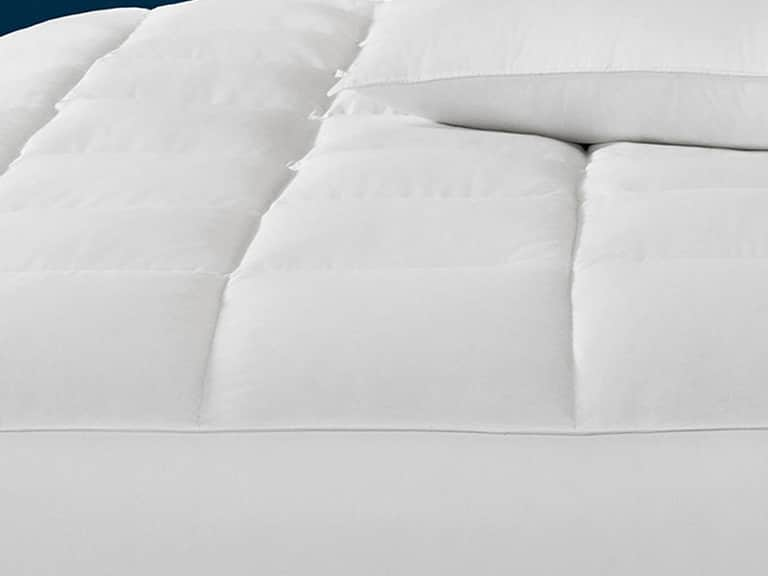
Mattress height matters, too. It affects the finished bed height once the foundation, mattress, and bedding are combined. A taller design may need deep-pocket sheets, while a low-profile mattress may feel unfamiliar on a tall frame. If a model includes a separate topper, check whether its stated height includes that layer and whether listed dimensions refer to the core or the full assembled mattress.
Do not overlook weight and handling. A natural-material construction can still be heavy or awkward to rotate, lift, or move. Ask whether the mattress is delivered compressed or full-size, whether setup is included, and what happens if access to the bedroom is difficult.
A neutral way to evaluate Naturepedic options
When comparing Naturepedic models—or any other brand—use the same questions for each candidate. Brand recognition can help you find information, but it cannot tell you whether a particular mattress matches your preferred feel, room, budget, or care routine. Compare specific models, not a company’s general reputation or a broad family name.
Create a simple comparison sheet with columns for construction, certified materials, firmness description, height, trial and return terms, warranty, foundation compatibility, and care instructions. Record where each fact came from, and mark anything that remains unverified. If a manufacturer uses a certification claim, check what it covers for that exact model. If the product page does not give enough detail, contact the brand with a direct question.
It is equally useful to compare Naturepedic against mattresses with different construction styles. For instance, the Savvy Rest Pastoral Wool Mattress is described as a 4.5-inch, latex-free design filled with GOTS-certified organic wool batting in a tufted organic cotton cover. Its low profile and wool construction distinguish it from taller layered latex options. That does not make it better or worse for a given person; it makes its specifications a useful prompt to ask whether the height, feel, and use case suit your needs.
Another contrasting example is the Naturally Organic Hudson Luxe Latex Mattress, described as a layered Dunlop latex mattress with wool and cotton, including a plush topper. Its construction and listed 10-inch overall profile differ substantially from a 4.5-inch wool design. Compare those practical distinctions—layering, height, materials, care, and stated comfort level—rather than treating an organic label as a shortcut to the answer.
Warranties, returns, and care are part of the decision
A warranty is not the same as a satisfaction guarantee. It generally describes how certain defects are handled under stated conditions; it does not necessarily cover normal changes in comfort, preference, or appearance. Read the duration, exclusions, and claim process. Check whether the foundation must meet specific requirements and whether you need to keep documentation or follow particular care instructions.
Return policies deserve equal attention. Confirm how long an evaluation period lasts, whether the mattress must be used for a minimum number of nights, whether returns involve a fee, and who arranges pickup. Ask what happens to a returned mattress. A policy that sounds generous in a headline may have conditions that matter in practice.
Care instructions can shape long-term convenience. Some covers are spot-clean only; others may have components that can be removed but not machine washed. Ask whether rotating is recommended, whether flipping is possible, and what type of protector is compatible with the design. A protector can help guard against spills and everyday wear, but it may change the surface feel, so choose one that fits the mattress and your priorities.
Finally, check delivery and setup costs, old-mattress removal, service-area limits, and estimated lead times. Those details are not glamorous, but they are part of the real purchase and can make an otherwise suitable option impractical.
A concise comparison checklist
Before deciding, review each candidate against the same list. Consistency makes it easier to distinguish documented facts from impressions and advertising language.
- Materials: What is in the cover, comfort layers, core, and any barrier or fire-safety layer?
- Certifications: Which components are certified, under what standard, and is the claim specific to this model?
- Comfort: What firmness or feel is stated, and how can you evaluate it at home or in person?
- Support: Does the construction suit your usual sleeping positions and any shared-bed needs?
- Dimensions: Will the size and height work with your frame, sheets, room, and delivery route?
- Compatibility: What foundation or adjustable-base requirements apply?
- Care: Can the mattress be rotated, and how should stains or routine wear be handled?
- Policies: What are the trial, return, warranty, delivery, and disposal terms?
- Open questions: What claims or construction details still need confirmation?
Make the decision on evidence and fit
The most reliable organic mattress guide is not a ranking that declares one material universally superior. It is a method for reading labels carefully, understanding the materials beneath the cover, and testing a mattress against the realities of your sleep and home. Certifications can clarify sourcing or production claims when their scope is understood; they cannot tell you whether a mattress will feel comfortable.
Take the time to compare specific models, request missing information, and read the fine print before buying. A thoughtfully chosen mattress should make sense on paper and feel right in practice. Let documented materials establish what the product is, and let your own comfort, support preferences, space, and care needs guide whether it belongs in your bedroom.